For years my back was stiff every morning until I stretched it out, and kettlebell swings are what finally loosened it. Stuart McGill’s research changed how I think about back pain: the spine should stay stiff while motion comes from the hips and shoulders.
AI-augmented, roughly 35% AI (what this means)
I love AI, and I use it on posts like this one partly to get better at using it. The percent is a rough guess: after rounds of prompting, rewriting and editing, it's very hard to say which words came from whom.
- Stuart McGill And the Big 3
- The Big 3 Exercises
- Spine Stiffness Requires Hip and Shoulder Mobility
- Weak Hips Make a Banana Back
- The Neck Poke
- Backpacks: Latch It Down
- The 5 Whys Applied to Back Pain
- Books
- See Also
Stuart McGill And the Big 3
If you’ve heard of the McGill Big 3, that’s this guy. Trivia tidbits:
- He did self experimentation by sticking a needle into every muscle and zapping it with electricity to improve diagnosis
- He broke his cervical spine
- He is Canadian, and a professor at Waterloo (my Alma Mater)
The Big 3 Exercises
The McGill Big 3 are isometric exercises that build muscular endurance with minimal spinal load:
- Curl-up - NOT a crunch. One leg bent, hands under lower back, lift head and shoulders slightly
- Side plank - Modified version on knees if needed. Focus on endurance, not duration
- Bird dog - On hands and knees, extend opposite arm and leg while keeping spine neutral
The key insight: these build endurance, not strength. Your stabilizer muscles need to work all day, not just lift heavy once.
Spine Stiffness Requires Hip and Shoulder Mobility
Your back is supposed to stay straight (especially your lower back), and your motion is supposed to come from your hips and shoulders (ball and socket joints).
If your hips or shoulders are stiff, your back will compensate by moving - and that’s where injuries happen.
Weak Hips Make a Banana Back
Here’s the version of this I can actually picture. When your glutes are weak and your hip flexors are tight (hello, desk chair), the pelvis tips forward. If your back stayed rigid, your whole trunk would tip with it and you’d be staring at the floor. But your eyes want to stay level (spine surgeons call the whole balancing act the cone of economy: head over feet, gaze level), so something has to bend: the lower back arches to pull the torso back upright, and your spine turns into a banana. It doesn’t bend evenly, either. The bottom of the lumbar curve tracks the slope of the sacrum, and about two-thirds of it lives at L4–S1. The lumbar spine, the part McGill wants stiff and neutral, now spends all day parked near the end of its range. (PTs call this the lordotic posture. It’s not swayback, where the pelvis slides forward and the upper back leans behind it; Physiopedia has the difference.)
Drag the hip slider, or hit Play, and watch the gaze line. It never moves; L4–S1 pays for it:
The Neck Poke
Same trick, one floor up. My head drifts toward the screen, and to keep my eyes level the bottom of my neck bends forward while the top cranks back. Cadaver work shows exactly that split: C4–C6 flex, the joints under the skull extend, the little suboccipital muscles end up shortest, and the extensors across C4–C6 get stretched. The head weighs 10-12 lbs, and the further it sits in front of the shoulders, the longer the lever the neck muscles hold it on (the red bar above). The famous numbers, Hansraj’s 27 lbs at 15 degrees up to 60 lbs at 60 degrees, are for tilting the head down to read a phone, not for sliding it forward with the eyes level, so read them as the direction, not the size of the poke. And adults with neck pain do tend to have more forward head posture.
The fix has the same shape for both: get the ball-and-socket joints doing their job, so the spine doesn’t have to bend to make up the difference.
How sure am I? The banana is a model, not a law. The “tight hip flexors, weak glutes, forward pelvis” pattern (Janda’s lower crossed syndrome) is taught everywhere but hasn’t held up well when people measured it, and a 2017 meta-analysis found people with low back pain tend to have less lumbar curve, not more. I still find it the clearest picture of why my back starts moving when my hips won’t.
Backpacks: Latch It Down
A backpack is the same balancing act with the weight bolted on from outside. The pack hangs behind the spine, so to keep from tipping backward the trunk leans forward at the hips until the upper body’s weight in front of the hip cancels the pack’s weight behind it. The eyes still want to be level, so the top of the neck tips back and the head rides out in front. You can measure it: at 10% of body weight young adults’ trunks leaned forward, and by 15% their heads had moved forward too. Schoolkids show the same forward head at 15–20%, and after a six-minute walk more than half of them felt it, mostly in the neck. Heavier pack, more lean.
How much lean depends on how far behind you the pack’s weight sits, which is why latching it down helps. With loose straps the pack slides down and swings away from your back, a long lever. Snug the shoulder straps and it comes in tight; clip the hip belt and part of the load goes onto the pelvis instead of hanging off the shoulders, about 30% of the vertical force in the one study that measured it. The sternum strap keeps the shoulder straps from sliding apart. The load-carriage research, mostly on soldiers, lands in the same place: keep the load close to your own center of mass, and let a hip belt take it off your shoulders.
Push the weight up with the straps loose, then hit Latched:
How sure am I? The direction is solid; the sizes aren’t. The degrees and centimeters in the figure come from a one-line torque balance, not a measurement. “Wear it high” is common advice, but the studies split: one found fewer head and neck changes with the load low, another found a low load disturbed walking more. So the part I trust is close, not high. The hip belt made people feel steadier without measurably changing their sway. And the famous “no more than 10–15% of body weight”: a review found the data supports that range, but recommendations run from 5% to 20%, and the prospective studies haven’t found that heavier school bags cause back pain. Nearly all of it is on kids. I read 10–15% as where posture starts to give, not a line where injury starts.
The 5 Whys Applied to Back Pain
The 5 Whys is the root-cause tool from the Correction of Errors process I use at work - it applies surprisingly well to back pain:
- Why Pain?
- Tightness
- Why Tightness?
- Body protecting from injury
- Why Protecting From Injury?
- Body feels instability in joints
- Why unstable?
- Lack of muscular endurance
This is what’s great about the McGill Big 3 - it’s isometrics to build endurance, as opposed to strength. And it does so with minimal back load (which would worsen the injury).
Books
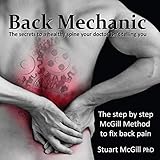

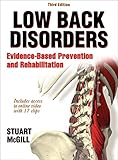
| Book | Audience |
|---|---|
| Back Mechanic | Laymans Guide |
| Back Fitness and Performance | Pretty complex, trainer/physio Therapist |
| Low Back Disorders | Super Technical Doctors/Physio Therapists |