Wrinkles and Wisdom: A Guide to Aging Like Fine Wine (Not Milk)
Midlife has a marketing problem, it’s always followed by the word crisis. Honestly, for good reason: Midlife is the chapter of your life where the things you and society value decline. E.g. you’re getting weaker and dumber. Embrace and optimize for this reality or suffer. Luckily there is a good formula here: both to embrace it, and to find new strengths to focus on.
This post covers several books on the topic.
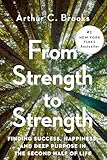
From Strength To Strength
TL;DR: Not sure if you felt like you were crushing it, or not through your late 30s, but you’re going to start to decline. You can either deny it and suffer, or embrace it and optimize for the next set of skills you can develop
Your professional decline is coming (much) sooner than you think
Huh, this is true for all who moved my cheese situations
- 3 choices:
- Deny and rage against failure - setup for failure and disappointment
- Shrug and resign yourself to decline - experience as a tragedy
- Accept what got you here won’t get you there - and build new skills
The second curve
- Fluid Intelligence: “Raw Horsepower/Being Smart” - This is what declines
- Crystallized Intelligence: “Wisdom” - This continues to grow. Get onto this curve
Kick your success addiction
- You’re going to get worse so stop tying your satisfaction to that
- Tie your satisfaction to stuff you can continue on - helping others, and getting spiritual
Start chipping away
- Figure out what makes you happy and focus on that
- Pro tip: Start with nothing and add vs throwing away
Ponder your death
Cultivate your aspen grove
- Make friends
Start your vanaprastha
The word vanaprastha comes from two Sanskrit words meaning “retiring” and “into the forest.” In the Hindu tradition, life is lived in four stages (ashramas), ideally ~25 years each:
| Stage | Age | Focus |
|---|---|---|
| Brahmacharya | 0-25 | Youth dedicated to learning |
| Grihastha | 25-50 | Career building, wealth accumulation, family |
| Vanaprastha | 50-75 | Pulling back from professional duties; spirituality, wisdom, teaching |
| Sannyasa | 75+ | Total dedication to enlightenment |
The Grihastha Trap
The second stage is where strivers get stuck. You become attached to earthly rewards—money, power, sex, prestige—and try to make this stage last forever. Sound familiar? This is another description of being stuck on the fluid intelligence curve, chasing Aquinas’s four idols that lead to self-objectification but never satisfy.
Brooks met a guru named Acharya in India who diagnosed the “man on the plane” (the miserable former CEO from Chapter 1): “He failed to leave grihastha. He was addicted to the rewards of the world.”
Vanaprastha = The Second Curve
Vanaprastha is the metaphysical context of the second curve. It doesn’t mean literally retiring at age fifty into a forest. Rather, it means your life goals must readjust—purposively pulling back from old personal and professional duties, becoming more devoted to:
- Spirituality and deep wisdom
- Crystallized intelligence
- Teaching and sharing with others
- Faith (in whatever form resonates with you)
The Key Transition
Breaking attachment to worldly rewards requires developing spiritual skills. Acharya warned: “The change can be painful, like becoming an adult for a second time.” It means letting go of things that defined you in the eyes of the world. You can’t just show up and expect to be enlightened—that would be like showing up to the Olympics without ever having trained as an athlete.
Acharya’s Core Advice
When Brooks asked what advice he’d give workaholics and success addicts who tremble at leaving grihastha, Acharya paused for a long time:
“Know yourself. That is all. Nothing else. Nothing else can release.”
“How?” Brooks asked.
“By going within. When your mind is quieter, you will find that treasure waiting for you within.”
Faith Rises As We Age
Many people find that in a midlife transitional state, their interest in religion and spirituality unexpectedly increases. This seems odd because people often become more skeptical of “magical” things as they age. But it’s strikingly common to find religious yearnings creeping in during one’s forties and fifties. For many, the metaphysical begins to feel real.
Brooks leans on James Fowler’s Stages of Faith for this: young adults get put off by the parts that look arbitrary or morally retrograde, and as they age they tolerate the ambiguity and start to see the beauty. I’d hold it a bit looser than Brooks does. Pew finds older Americans do pray and attend more, but only part of that gap is people turning to religion as they age; the rest is that older generations were more religious to begin with. So not “you’re on schedule,” more “some people find this turns on at midlife, and if it does, here’s what to do with it.”
The Problem for Strivers
Strivers are often the least prepared for this change. On the way up professionally, faith and spirituality might be “nice to have” but not any kind of priority. So they languish when they need it most.
Brooks cites research that religious and spiritual adults are happier, less depressed, healthier and less likely to abuse drugs and alcohol. The catch I keep bumping into: the benefit seems to ride on the community and the practice, not the belief. A study of 7,403 English households found the “spiritual but not religious” group did worse than people who were neither: “People who have a spiritual understanding of life in the absence of a religious framework are vulnerable to mental disorder” (King et al. 2013). Which is uncomfortable for someone like me trying to cobble it together alone.
Why Spirituality Helps
Brooks’s explanation for the happiness bump: When you spend serious time and effort focused on transcendental things, it puts your little world into proper context and takes the focus off yourself. That’s what I call Scale on spiritual health (the other two are Direction and Acceptance).
Most of our days, we’re thinking me, me, me. It’s like watching the same dreary television show, over and over, all day long. It’s so boring. Faith forces you into the cosmos, to consider the source of truth, the origin of life, and the good of others. This focus brings refreshment and relief.
Philosophy Counts Too
A common question: does this higher focus have to be religious or spiritual? Can it be, say, an interest in philosophy? Yes. A perfect example is the growing interest today among young people in ancient Greek thinking—specifically, Epicurean and Stoic philosophy. Many have taken a keen interest in the works of Epicurus, Epictetus, Seneca, and Marcus Aurelius. And not for intellectual reasons—they find secrets to the meaning of their lives therein, and it brings them happiness.
The Bottom Line
If you are in a transitional state in your life and find your interest in the transcendental growing—even if you have marginalized this part of life in the past—you are right on schedule. Don’t resist.
Overcoming Obstacles to Vanaprastha
1. The “None” in the Mirror
Many middle-aged people having religious stirrings for the first time find these urges confusing and even troubling—especially if they always neglected faith as unimportant, or moved away from faith earlier in life, or even redefined themselves as non-religious or anti-religious.
To relax this stance makes people feel like others will find them weak, or flaky.
Carl Rogers argued that we develop our self-concept as we grow. We resist any deviation from our self-concept because it provokes feelings of insecurity. Calling yourself a “none” is actually a commitment, an identity as powerful as “Jew” or “Buddhist.”
But even if “none” is an accurate portrayal of you at the moment, it does not have to hamstring your openness to religion and spirituality. The key is to subtly shift your self-concept from “none” to “none right now” or, perhaps, “none, but open to suggestion.” This injects the element of vulnerability to your understanding of yourself. While you may not have faith right now, the door is cracked open. Something might wander in.
2. Santa in the Church
Our first impression of faith and spirituality tends to be childish—and that impression can haunt us as we mature. We often dismiss religion as a mishmash of myths and childish nonsense that well-adjusted adults should logically leave behind.
Many opponents of religion attack it by appealing to these memories. (Billboard at the mouth of the Lincoln Tunnel: “You KNOW it’s a Myth. This Season, Celebrate REASON!”)
When spiritual urges arise, the appropriate course of action for adults is not to cross-reference them to naïve ideas we had as children—we wouldn’t do that in any other area of life. Rather, it is to look to greater minds than our own. Thomas Aquinas’s Summa Theologica anticipated almost every serious objection to faith.
If you admit your view of childhood religion was naïve, you can allow yourself to search for transcendental truths not as you first learned them, but from a mature, critical perspective. Emancipate yourself from the cartoon versions in your mind—leave them behind—and expose yourself with an openness to the thinking and writing of scholars and worthy practitioners.
3. The Tyranny of Time
Faith requires time and effort; there’s no getting around this. It competes with the demands of our ordinary lives. You can’t really contemplate the secrets of the universe in a couple of hours; that’s more like a commitment to watching a movie. If you read, pray, or meditate—and want to get something out of it—that’s time every day. Advanced practitioners of faith or spirituality spend as much time on this as a fitness buff does at the gym.
Many people craving faith simply never find the time or never devote enough effort to develop anything meaningful. They just kick the can of faith down the road of life and wind up saying, “My one true regret is not having gotten around to my faith.”
The solution: Stop seeing your spiritual development as a side interest but rather put it front and center. You must make the time by scheduling your meditation, prayer, reading, and practice. Every day.
Walking Into Transcendence
For many, what’s needed is simply an excuse to get started—a punctuation to the equilibrium of life that allows them to try something new. Here’s a simple suggestion: go for a walk.
Nearly all major religions have pilgrimages—”the physical traversing of some distance from home to the holy place,” motivated by sentiment or belief. For Catholics, there is the famous Camino de Santiago (Way of Saint James) across northern Spain.
The Camino de Santiago has seen an explosion in pilgrims, rising from 145,877 in 2009 to 347,578 in 2019.
Why do they do it? Walking is excellent exercise; it’s one of the best exercises we can engage in for health and happiness. But the secret of the Camino is, on the contrary, the utter lack of thrills. At the beginning, interior shouting torments the pilgrim. One is tempted to stop at every roadside café offering Wi-Fi. But by about day three, this begins to subside as the walk begins to harmonize the mind with the body to a pace that is natural and unforced. The walk becomes a long piece of music—an andante—which neither lags nor hurries, and thus brings a sense of ease.
The Camino is a form of extended walking meditation. “Each mindful breath, each mindful step, reminds us that we are alive on this beautiful planet,” explains Thich Nhat Hanh.
The transcendent effects of a pilgrimage appear after a few days, in waves of perception. The Camino is all about walking, not arriving. Fulfillment cannot come when the present moment is little more than a struggle to bear in order to attain the future. The focus must be on the walk—life with its string of present moments.
Each present moment, in turn, provides small satisfactions we miss when the focus is only on bigger and better. For example, one morning Brooks and his wife spotted the oddest flower—the blue passion flower (Passiflora caerulea)—and stared at it, transfixed, for ten minutes. This would be impossible on the hedonic treadmill, running for prizes that pale in comparison.
Gratitude Walks
You don’t need to walk the Camino. Brooks practiced “gratitude walks” during COVID lockdowns—around his neighborhood nightly after dinner. Almost the moment he began the journey, gratitude began to bubble up—for family, faith, friends, work; but also for a cool drink of water, taking off his shoes, a soft pillow at night.
While the steps mark each present moment, a day is a perfect span of time to dedicate to different intentions—to focus in prayer or meditation on the good of another. One day personal (his son in the Marines), another day global (people suffering from poverty and conflict). The walking meditation creates a sense of love and compassion for the objects of each intention, and finishes with a concrete resolution to act accordingly.
“It’s your road and yours alone,” wrote the Sufi poet Rumi. “Others may walk it with you, but no one can walk it for you.” All I can say is that you won’t be the same afterward. It will supercharge your vanaprastha. You might just walk right onto your second curve.
The Strength to Jump
When we think of our identities as fixed and unchanging—I am this kind of person; I am not that kind of person—we’re shutting ourselves off from many of life’s possibilities. Being open to reevaluating our ideas about ourselves can keep us from getting stuck in patterns that aren’t true to our changing selves. Many people do change with age. Allowing that change to happen and developing our inner life helps us get onto the second curve.
What so often holds people back, as in the case of Nicodemus, is that it feels like a kind of weakness to lean on spirituality after a lifetime of holding up oneself. If there’s one thing strivers hate, it’s weakness.
As Brooks shows in the next chapter, however, wanting spiritual depth is not a weakness—it is a new source of strength needed to jump to the crystallized intelligence curve.
Spiritual longings are not just a special case of strengths looking like weaknesses. Our lives are full of these things, and that is the next lesson we need to learn to get on the second curve.
Make your weakness your strength
- Share that you’re in decline, being vulnerable is a strength
Cast into the falling tide
Seven words to remember.
Midlife
Book: Learning to love in midlife
- U-shaped happiness curve - dip at 47, comes back up the other side
- What is good about the other side of life
-
Middlessence
- Adolescence - invented in 1900s before that, just children and adults
- Sets expectations
- Includes Rituals
- Includes Support
-
Same for midlife
-
Old Stage:
- Learn
- Work
- Retire
- Life Stages:
- Up to midpoint - all about accumulating
- Middle Edit - all about editing
- End - all about savoring
5 lives
- Physical Life
- I have more life than I thought
- I’m relieved my body no longer defines
- Emotional Life
- I’m making friends with my emotions
- I invest in my social well-being
- I have more ducks left to give
- Mental Life
- I’m marveling at my wisdom
- I understand how my story serves me
- I’ve learned how to edit my life
- Vocational Life
- I’m joyfully stepping off the treadmill
- I’m starting to experience time affluence
- Spiritual Life
- I’ve discovered my soul
- I feel as if I’m growing whole
Modern Elder
Learning to Love Midlife: Reasons to Thrive in the Best Years of Your Life
The skills
Being present …
- Noticing. Modern elders are first-class noticers and make the unconscious conscious. They are fully aware of themselves and others.
- Presencing. Modern elders are really present for others, rather than having a cluttered mind in the presence of others. Doing regular mindfulness meditation calms and quiets the cluttered mind and moves you to be more attentive to others.
Being proactive …
- Mastering. Modern elders mine their own mastery. “What sage experience do you possess that might help someone a generation or two younger than you? Ideally, your mastery taps into your wisdom and has your fingerprints all over it.”
- Catalyzing. Modern elders initiate something new. “How do we best start something? What are the things that have traditionally held us back from new learning, new exploration, and new adventure?”
Having purpose …
- Purposing: Modern elders understand and shape their purpose for living. “Purposing takes time and work. This is often more easily said than done … Being patient as ideas digest and evolve require fortitude to not jump before we are ready.”
- Editing. Modern elders use the skill of noticing/awareness for a “great midlife edit.” What could you edit out of your life so that you can edit in something more inspiring and purpose-filled?
Relationships first, Serve Others
Loving well, and feeling well-loved, are the two qualities that people cherish most later in life.”
-
Connecting. Modern elders are intentional about connecting with people, and joining communities. “Building rapport, laughing, playing, and socializing form a deep part of human thriving and impact our ability to collaborate.
-
Serving. Modern elders serve others. Modern elders ask, “How can I best serve this person? They move from attaining — where they seek to win — to attuning - where they seek to understand the environment, be in tune with it, and make it better.
Book: Wisdom at work - modern elder Wisdom at Work: The Making of a Modern Elder
Idea:
- Evolved elder - not just older, but actively involved in the business environment
- Learning mindset - curiosity about new technologies and trends
- Collaborative leadership - guiding, not commanding
- Counselor - sharing insights and fostering a culture of mutual learning
All Fours - A novel.
OK, be warned - this sucker gets a bit pornographic. But when I told my buddy I was studying midlife, he was like how are you getting a woman’s perspective, go read all fours.
I don’t read a lot of books from a woman’s perspective, it’s fascinating, but I’ll share that for another post. For now, let me start with the topics
The name - I think it comes from a line in the book: people think doggy style is the most vulnerable position because you can’t see what’s happening. But it’s not, with 4 limbs on the ground you’re actually the most stable, best able to respond.
The advantages of menopause
- Copy this out of the sound bites
To file
- Gotta invest in physical health
- Settling vs doing what you want
- Parenting vs spousing
- Gender fluidity
- Mind vs Body sexuality
- Gender Unfairness
- The mom vs dad expectations
- The man vs woman’s drop in hormones
- The point where women stop being attractive, but remain sexual beings
- Affairs
- Saving something only for th wife
- Not wanting to say I love you
- Non sexual intimacy
- The impact of eye contact
- The desire to be wanted
- Suicide (Barely)
- The relativeness of success
- The “peaking early”
- Drivers vs Passengers ( I need to understand that better)
- The Salute between husband and wife
- The callousness of repetition (nurse in the NICU)
- Loss, even when it wasn’t
- The whole thing about the baby that could have died
- Trauma to bring us together
- The dog dying scene
- The guilt of doing stuff for yourself
Related posts
Are there 40 year old programmers?
Post midlife, you’re going to die