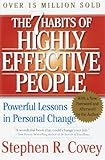
I’ve got stuff I’m good at and stuff I’m bad at — so does everyone I work and live with. Combine them right and the system is greater than the sum of the parts — sometimes a lot greater. Synergy is the payoff for everything that came before: independence, Win/Win, and seeking first to understand all converge here. These are my insights from 7 habits Chapter 6.
AI-augmented, roughly 60% AI (what this means)
I love AI, and I use it on posts like this one partly to get better at using it. The percent is a rough guess: after rounds of prompting, rewriting and editing, it's very hard to say which words came from whom.
- What Makes Synergy Possible
- Examples of Synergy in Action
- Finding that Third Alternative
- Negative Synergy
- Valuing the Differences
- Force Field Analysis
- Books

What Makes Synergy Possible
Synergy is when 1 + 1 = 3. Or 8. Or 1,600. The classic frame: plant two trees close together and the roots co-mingle, the soil improves, both trees grow taller than they would have alone. That’s the picture I keep in my head — interdependence isn’t compromise, it’s compounding.
Three things have to be true for it to fire:
- Real differences in the room. If everyone thinks the same way, one of us is unnecessary. Sameness is not unity.
- Enough trust to risk being wrong out loud. Synergy is creative, and creative is unpredictable. If I’m spending half my attention defending my position, the other half isn’t enough to discover anything.
- The intent to find a better answer, not to win the argument. The moment “winning” enters the room, synergy leaves.
The first three habits give me the internal security to handle the risk of being open. The next two — Win/Win and empathic listening — give me the right motive and the right skill. Synergy is what falls out when all of that is in place.
Examples of Synergy in Action
The clearest example I have is at work. When I’m running a project well, the engineer I’d never want to lose isn’t the one who agrees with me — it’s the one who pushes back in a way I can’t dismiss. We both leave the conversation with something neither of us walked in with. That’s the goose that lays the golden eggs of a team.
A few other places I see it land:
- Pair programming and code review at its best. Two engineers seeing the same diff through different eyes catch a class of bug neither would have alone. Add a designer to the same conversation and the surface area gets bigger again.
- Family planning conversations. Tammy and I plan the week on Sunday. Left to me, the calendar would be all bike rides, magic, and side projects. Left to her, it would be more time with the kids and dinners with friends. The actual week we agree on isn’t a 50/50 split — it’s a different week, one that neither of us would have proposed solo.
- Running 1:1s with my engineers. The point isn’t for me to download my plan into them or for them to download status into me. The good ones are the ones where we co-author the next move on whatever they’re stuck on, and I leave smarter than I came in.
The half-form of this — respectful but uncreative — is compromise. Compromise is 1 + 1 = 1.5. Both sides give and take, the conversation is polite, and nothing new is created. That’s not synergy; that’s just a draw.
Finding that Third Alternative
The third alternative is the heart of the habit. It’s not my way. It’s not your way. It’s a third way that neither of us could have reached alone.
Most disagreements lock into either/or within the first 30 seconds. Either we go to the lake or we visit your mother. Either we ship the feature or we fix the test suite. Either I’m right or you’re right. The trap is that I take the framing as given and start optimizing inside it, instead of stepping back and asking whether the framing itself is the problem.
The classic Covey example is a family vacation: husband has booked a fishing cottage, wife wants to visit her ailing mother 250 miles away. The compromise — split up, he takes the boys, she goes to her mother — leaves both of them guilty and the boys reading the tension. The third alternative is to ask what each of them actually wants. He wants outdoors with the boys. She wants meaningful time with her mother. So they look for a place to camp and fish near the mother, fold in the cousins, and the week now serves both wants without anyone giving anything up. The original positions become irrelevant.
The rough recipe I use:
- State the problem as shared, not as positions. “We have one week and two important things” is workable. “I want X and you want Y” is a fight.
- Listen first until the other person says, “yes, that’s exactly it.” I can’t reframe what I haven’t actually understood.
- Then say my own piece — fully, not half-strength. A third alternative needs both sets of needs in the room, not a sanitized version.
- Brainstorm without ownership. No “my idea” vs. “your idea” — just ideas on the whiteboard, and we both get to riff on each.
The output is almost never one of the original two options. It’s a thing nobody walked in with.
Win/Win vs. the Third Alternative
People conflate this with Think Win/Win (Habit 4). They’re related but not the same.
| Habit 4: Win/Win | Habit 6: Synergy / Third Alternative |
|---|---|
| A mindset and intention | A creative process |
| “Let’s both come out OK” | “Let’s create something neither of us has imagined” |
| Often arrives at compromise or trade | Transcends the original positions entirely |
| You can think Win/Win alone, in advance | You can only synergize together, in real time |
| 1 + 1 = 2 | 1 + 1 = 3 (or 1,600) |
Win/Win is the prerequisite — without the abundance mindset I’m playing zero-sum in my head, and synergy can’t fire. But it’s only the table stakes. The third alternative is what’s possible once both people have that mindset and the empathic listening to use it.
For more on how I apply this in negotiations, see my notes on Getting to yes, which is essentially third-alternative thinking applied to deal-making.
Negative Synergy
Negative synergy is what most meetings actually produce. It’s the meeting where everyone leaves dumber than they came in. The same energy that could compound creativity is being burned on protecting backsides, scoring points, and second-guessing.
The shape I recognize:
- Groupthink. Everyone agrees on the surface. Nobody believes the agreement. The room optimized for harmony and got compliance.
- Defensive everything. Half the bandwidth goes to prepping the next defense instead of hearing the actual point. Memos written to be unfalsifiable. Slack threads that read like legal depositions.
- Borrowed-strength power moves. Someone pulls rank — title, tenure, “I’ve seen this before” — and the room shuts down. Even if they’re right, the fact that they had to use the lever means nobody else’s brain is in the conversation anymore.
- One foot on the gas, one foot on the brake. The team is publicly committed to a goal and privately working against it. Output drops, frustration rises, and the answer is usually “more pressure” — which is more gas, when the actual fix is taking the foot off the brake.
The diagnostic on myself is honest: when I’m in negative-synergy mode, it’s almost always because I’ve stopped feeling secure enough to be wrong in public. The fix lives in the first three habits, not in better meeting facilitation.
Valuing the Differences
The cornerstone insight: people don’t see the world as it is — they see it as they are. If I think I’m objective and everyone else is biased, I’ll never get anything from anyone. I’ll be limited to the size of my own conditioning.
This shows up most for me as a manager. I have engineers whose strengths look nothing like mine — someone who is twice as careful as I am about edge cases, someone who reads org politics in a way I find exhausting, someone who’ll grind on a debug for ten hours where I’d have given up at three. My instinct, when those differences first show up, is to read them as deficits. Why won’t they just move faster / care less / push harder? The honest answer is that I’d be building a team of clones of myself, and a team of me is much weaker than a team of complements.
Same with my marriage. Tammy and I are different in ways that I sometimes wish away — and every time I sit with it, the differences are exactly what makes the partnership work. The mistake would be trying to talk her into seeing it my way. The move is to say, “good, you see it differently. Help me see what you see.”
The internal version of this matters too. The analytical, verbal, left-brain part of me wants facts and bullet points. The intuitive, image-based, right-brain part of me wants to feel into a thing before naming it. When I treat one of those as the only legitimate way to think, I’m running on half a brain. Synergy starts inside.
Force Field Analysis
Kurt Lewin’s frame, and one of the more useful tools I’ve kept from this chapter. Any current state — a team’s morale, my fitness level, the climate at home, the tone of a 1:1 — is an equilibrium between two sets of forces:
- Driving forces push toward the goal. They’re usually the logical, conscious, easy-to-list ones: the goal itself, the deadline, the incentive, my willpower.
- Restraining forces hold the current state in place. They’re usually emotional, social, half-conscious, embarrassing to name out loud: fear of looking dumb, an old story about who I am, a bad past experience, a habit nobody wants to confront.
The default move is to push harder on the drivers. More pressure. More logic. More deadlines. It works for a while and then snaps back, like pushing on a spring. The actual leverage is on the restraining side — name the thing that’s holding the state in place, talk about it, and the spring loosens.
Concrete example for me: I want my team to ship faster. Driving forces — quarterly goal, customer pressure, my own urgency. Restraining forces — fear that the previous launch’s bugs will repeat, a code review process that’s grown into theater, one engineer who’s burned out and not saying so. Pushing harder on the drivers makes the restraining forces stronger. Naming the restraining forces (and treating them as legitimate, not as obstacles to bulldoze) is what actually moves the equilibrium.
This is why synergy beats willpower in interdependent situations. Willpower can crank the drivers. Only the combination of Habits 4, 5, and 6 — Win/Win motive, empathic listening, creative interaction — can dissolve the restraining forces, because most of them only show up when someone feels safe enough to name them.