A Facebook infographic crossed my feed: “12 Japanese Wisdoms — Ideas for a more meaningful life.” My first reaction was “are these words even real?” (yes, mostly; see the footnote). My second was that I already have a blog post for most of them. So here they are as raccoons, sorted into what I practice, what I’m reaching for and what’s least for me.
AI-augmented, roughly 80% AI (what this means)
I love AI, and I use it on posts like this one partly to get better at using it. The percent is a rough guess: after rounds of prompting, rewriting and editing, it's very hard to say which words came from whom.
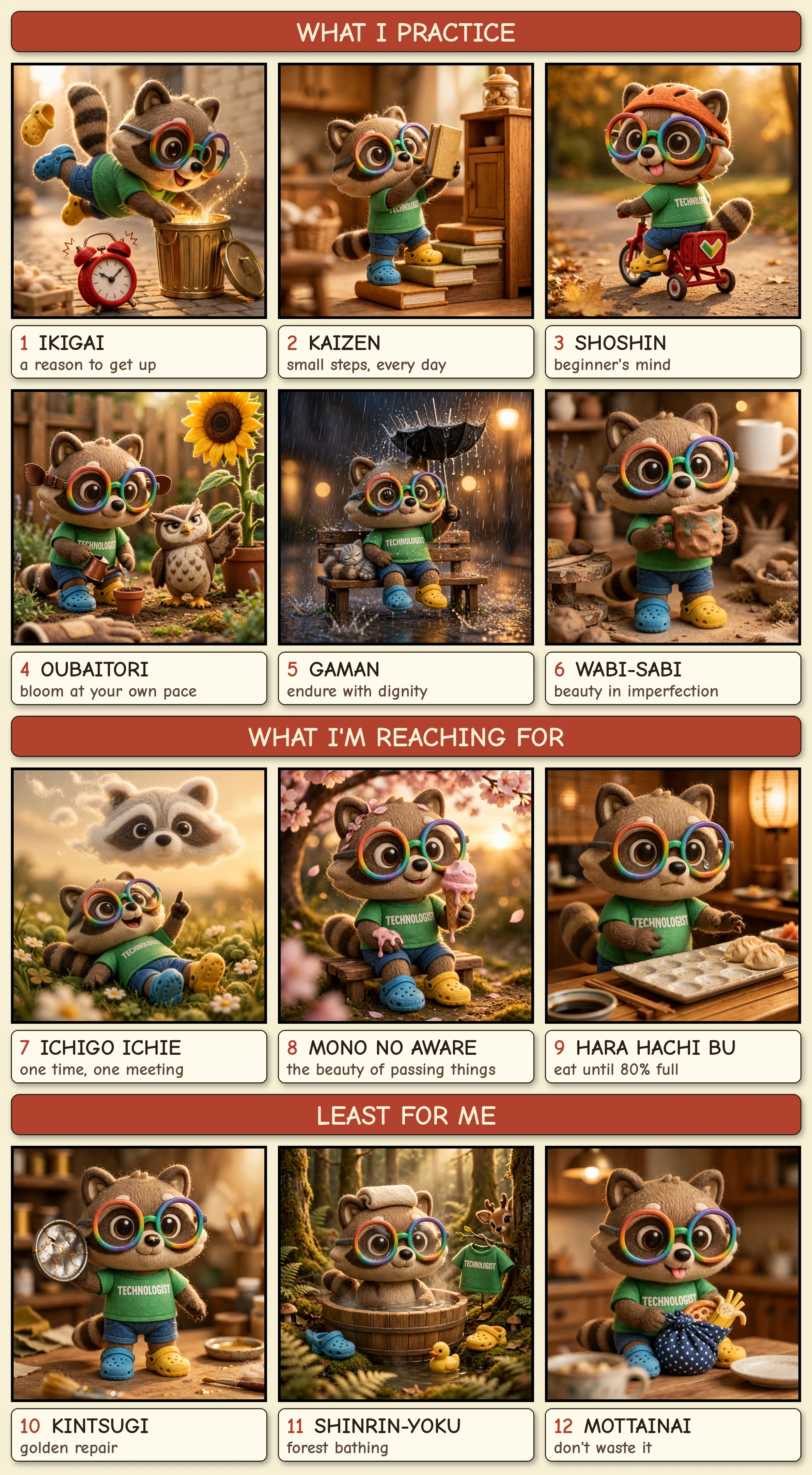
What I practice
1. Ikigai: a reason to get up

Mine: begin with the end in mind, which is why I wrote my eulogy.
2. Kaizen: small steps, every day

Mine: deliberate, disciplined, daily.
3. Shoshin: beginner’s mind

Mine: isn’t that curious?
4. Oubaitori: bloom at your own pace
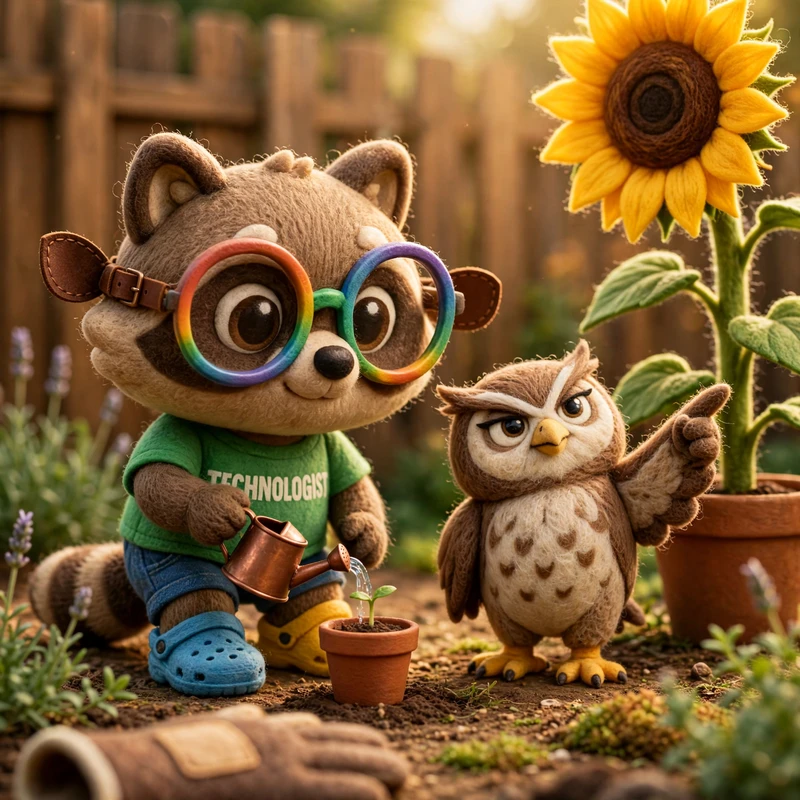
Mine: dealer of smiles and wonder.
5. Gaman: endure with dignity

Mine: calm like water.
6. Wabi-sabi: beauty in imperfection

Mine: I enjoy amateur everything; it’s just more interesting. Hence the mismatched shoes and crazy shirts.
What I’m reaching for
7. Ichigo ichie: one time, one meeting

Mine: be present.
8. Mono no aware: the beauty of passing things

Mine: life is finite, time is limited.
9. Hara hachi bu: eat until 80% full

Mine: no mindless eating.
Least for me
10. Kintsugi: golden repair

Mine: learn from mistakes.
11. Shinrin-yoku: forest bathing

Mine: no post for this one.
12. Mottainai: don’t waste it

Mine: honestly, the opposite of what I want.
Are these words real?
Yes, all 12 are genuine Japanese. The infographic glosses drift, though: a real word picks up a self-help meaning on its way to English. The ikigai four-circle Venn diagram isn’t Japanese (its history). Kaizen is an everyday word for “improvement” that a 1986 management book turned into a doctrine. Shinrin-yoku was coined by Japan’s forestry ministry in 1982. In Buddhist usage gaman meant arrogance (我慢, Kotobank), and oubaitori (桜梅桃李) is an obscure idiom whose “stop comparing” meaning is a modern spin. The rest: mono no aware, wabi-sabi (侘び寂び), shoshin, ichigo ichie, mottainai, hara hachi bu, kintsugi. A word can be useful even when the meme about it is wrong. That’s The Words We Don’t Have.