The Four Kinds of Health: Physical, Emotional, Spiritual, and Cognitive
emotional-health , how igor ticksHealth isn’t one-dimensional. You can be physically fit but emotionally exhausted. You can be cognitively sharp but spiritually adrift. True well-being requires attending to all four dimensions of health: physical, emotional, spiritual, and cognitive. Each dimension serves a different purpose, requires different practices, and neglecting any one creates vulnerabilities that ripple across your entire life.
AI-augmented, roughly 85% AI (what this means)
I love AI, and I use it on posts like this one partly to get better at using it. The percent is a rough guess: after rounds of prompting, rewriting and editing, it's very hard to say which words came from whom.
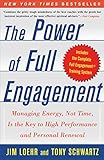
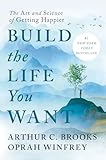
This framework draws heavily from two foundational books on energy and happiness:
- The Tests
- The Four Dimensions
- Why All Four Matter
- Rituals for Each Dimension
- The Compound Effect
- Common Failure Patterns
- Building Your Health System
- Ideas I’m grinding through
The Tests
Health is rented, and rent is due every day. Gosh I like saying that, because it’s so true — and it’s true of all four, not just the body. None of these is a state you reach and keep. You’re fit while you’re fit, and when you’re not, you train.
Which is why the useful thing for each dimension isn’t a definition. It’s a test you can answer today.
| The test | It breaks when | |
|---|---|---|
| Physical | Is your body ever the reason you say no — and are you still asking it for anything? | Your life quietly shrinks until the body is never tested, so it never gets to say no |
| Emotional | Open — something about awareness, or grasping and aversion. Not settled. | |
| Spiritual | Are you sustainably motivated in a way you’d be proud to see in your child? | You’re motivated toward something you’d hate to see in your kid — the addict case |
| Cognitive | Open. |
Two of the four have a test. The other two have descriptions, which is a different thing — you can’t answer a description.
The Four Dimensions
Physical Health: Your Energy Foundation
Physical health is your body’s capacity to generate and sustain energy. Without it, everything else becomes harder.
A healthy person has a thousand wishes; a sick person has only one. Lose your health and every other want collapses into that one — to be well again.
What it enables:
- Sustained focus and productivity
- Stress tolerance and recovery
- Sleep quality and emotional regulation
- Presence and engagement with others
Core components:
- Strength and stability
- Cardiovascular fitness (aerobic and anaerobic)
- Sleep and recovery
- Nutrition and metabolic health
What happens when you neglect it:
- Chronic fatigue and brain fog
- Poor stress management
- Emotional volatility
- Accelerated aging and disease risk
For the long game, think about your Centenarian Olympics - what physical capabilities do you want to maintain at 80 or 90?
Emotional Health: Your Resilience System
Emotional health is your ability to navigate feelings, maintain positive relationships, and stay resilient under stress. It’s not about always being happy - it’s about having the tools to process whatever you’re experiencing.
What it enables:
- Handling setbacks without collapse
- Maintaining relationships through conflict
- Staying grounded during uncertainty
- Processing grief, fear, and disappointment
Core components:
- Self-awareness and emotional regulation
- Empathy and compassion
- Mindfulness and presence
- Healthy relationship patterns
What happens when you neglect it:
- Mood swings and reactivity
- Damaged relationships
- Burnout and emotional exhaustion
- Inability to process difficult experiences
See also: Search Inside Yourself for emotional intelligence training, and Sublime States for Buddhist practices on emotional well-being.
Spiritual Health: Direction, Scale, and Acceptance
Spiritual health is what keeps you going on the marathon; emotional health is what gets you through the sprint. When it’s gone, one of three things is usually missing:
- Direction: a north star. Without it you feel aimless, even while you’re achieving.
- Scale: knowing you’re not the center of the universe. Without it every setback is a catastrophe and you burn out.
- Acceptance: you have influence, not control. Without it you exhaust yourself on outcomes you can’t reach.
Some people find all three through religion. If you’re not religious you still need them; you just have to build the practices yourself.
Cognitive Health: Your Growth Engine
Cognitive health is your ability to think clearly, learn effectively, and grow continuously. It’s your capacity to engage with ideas, solve problems, and expand your understanding.
What it enables:
- Clear thinking and good judgment
- Learning new skills and adapting
- Creative problem-solving
- Intellectual engagement and curiosity
Core components:
- Reading and learning habits
- Writing and reflection
- Exposure to new ideas
- Deliberate practice
What happens when you neglect it:
- Mental stagnation and rigidity
- Poor decision-making
- Inability to adapt to change
- Loss of curiosity and engagement
Also see my approach to learning new skills.
Why All Four Matter
The four dimensions are interconnected. Neglecting one weakens the others:
- Without physical health, you lack the energy for emotional regulation, spiritual reflection, or cognitive work
- Without emotional health, you can’t handle the stress of physical training, maintain meaningful relationships (spiritual), or think clearly (cognitive)
- Without spiritual health, you lack the motivation to maintain physical practices, the resilience for emotional challenges, or the direction for cognitive growth
- Without cognitive health, you can’t learn better physical practices, develop emotional skills, or deepen spiritual understanding
They form a system, not a checklist.
Rituals for Each Dimension
Rituals are how you maintain health in each dimension. They transform abstract intentions into concrete practices.
Physical Rituals
- Morning workout before decision fatigue sets in
- Scheduled training sessions (not “when I feel like it”)
- Consistent sleep schedule
- Meal planning and preparation
See my physical health practices and morning routine.
Emotional Rituals
Emotional rituals keep you resilient by creating space to process feelings and maintain perspective:
- Daily meditation practice
- Gratitude journaling
- Box breathing during stress
- Regular connection with loved ones
These aren’t optional when you “have time” - they’re what prevent emotional collapse when life gets hard.
Spiritual Rituals
One for each of the three:
- Direction: re-read your eulogy, and hold the weekly review up against it
- Scale: go for a walk and get small (see the walk)
- Acceptance: sort what you control from what you only influence, and let go of the rest (see Stoicism)
Without them you drift into just optimizing for productivity.
Cognitive Rituals
Cognitive rituals ensure continuous growth:
- Daily reading time (scheduled, not hoped-for)
- Weekly writing and reflection
- Learning projects with deliberate practice
- Exposure to challenging ideas
The Compound Effect
Small consistent practices in each dimension compound over time:
- Physical: Training 4x/week for years builds strength reserves for aging
- Emotional: Daily meditation for years builds resilience that carries you through crisis
- Spiritual: Weekly reflection for years keeps you aligned with what matters
- Cognitive: Daily reading for years expands your mental models and capabilities
The opposite also compounds: neglect in any dimension creates debt that accumulates with interest.
Common Failure Patterns
The One-Dimensional Optimizer: Focuses exclusively on one dimension (usually physical or cognitive) while others atrophy. Classic example: the executive who’s crushing it at work but burning out emotionally and spiritually.
The Intentions-Without-Systems Person: Knows what they “should” do in each dimension but hasn’t built rituals and habits. Relies on willpower and motivation, which inevitably fail.
The Busy Procrastinator: Always too busy for health practices. “I’ll focus on this when things calm down.” Things never calm down. Health continues declining.
The All-or-Nothing Perfectionist: Tries to optimize all four dimensions simultaneously, gets overwhelmed, abandons everything. Then restarts from zero. Repeat.
Building Your Health System
You don’t rise to the level of your goals - you fall to the level of your systems.
Start with rituals, not aspirations:
- Audit current state: Which dimensions are you neglecting? What’s the cost?
- Pick one dimension to focus on first (usually physical - it provides energy for the others)
- Design minimal rituals that you can sustain even on bad days
- Build in anchors and clips (see rituals as anchors) so when you slip, you don’t fall all the way down
- Gradually add practices in other dimensions once first rituals are solid
Remember: practice makes permanent. Whether you design your rituals consciously or let them form by default, you will have rituals. The question is whether they serve you or sabotage you.
Ideas I’m grinding through
Spiritual Health vs Identity
Spiritual health and identity are closely related but distinct concepts that often get conflated.
Identity: Who You Are
Your identity is your answer to “who am I?” It’s the roles you occupy, the values you hold, the characteristics that define you. Identity is largely descriptive - it names what’s true about you.
Examples from my eulogy:
- Father, husband, friend
- Disciple of the 7 habits
- Emotionally healthy human
- Magic practitioner
These are identity statements - they describe who I am and aspire to be.
Spiritual Health: Why It Matters
Spiritual health is the connection and meaning you derive from your identity and actions. It’s not just knowing who you are - it’s feeling anchored to why that matters, feeling connected to something beyond immediate circumstances.
You can have a clear identity (“I’m a parent, I’m a software engineer”) but poor spiritual health (feeling empty, going through motions, wondering “what’s the point of any of this?”). The identity is intact, but the spiritual connection to meaning is broken.
The Relationship
-
Identity without spiritual health: You know your roles and values but feel disconnected from their meaning. You’re doing all the “right” identity things but feeling hollow.
-
Spiritual health anchored in identity: Your eulogy values aren’t just descriptions - they’re sources of meaning. Being a father isn’t just a role, it’s a profound connection to purpose. Practicing magic isn’t just a hobby, it’s a spiritual practice that grounds you.
Why This Distinction Matters
When you feel spiritually adrift, the problem isn’t always that you lack identity clarity. Sometimes you know exactly who you are - you just can’t feel why it matters. That’s a spiritual health problem, not an identity problem.
The solution isn’t to redesign your identity - it’s to rebuild the spiritual practices that connect you to the meaning inherent in your existing identity. That’s what spiritual rituals do: they maintain your felt connection to purpose, not just your intellectual knowledge of who you are.
Mapping to Igor’s Affirmations
My daily affirmations map naturally to these four health dimensions. Looking at the mapping reveals both coverage and gaps:
| Affirmation | Physical | Emotional | Spiritual | Cognitive |
|---|---|---|---|---|
| 1. Do It Anyways Deliberate. Disciplined. Daily |
5am gym, kettlebells, trainer sessions, morning routine | 20 min morning meditation, box breathing, gratefulness journal | Discipline as identity - living eulogy values | — |
| 2. An Essentialist Know Essential. Provide Context. Prioritize Ruthlessly |
— | — | Begin with end in mind - your spiritual compass (knowing your mountain, living eulogy values) | Same approach at tactical level: what's essential for this work problem? Writing to provide context |
| 3. A Class Act First Understand. Appreciate. Isn't that Curious |
— | Seek first to understand, appreciation practice, emotional intelligence | — | "Isn't that curious" - cognitive reframing to override triggers |
| 4. Calm Like Water Be Present. This too shall pass. Work the problem |
— | "This too shall pass", being present, emotional regulation | Being present for joy, meaning in moments | "Work the problem" - stay analytical under stress |
The Cognitive “Gap” That Isn’t
Notice: three affirmations emphasize emotional/spiritual health, one covers physical, and none directly address cognitive health as a primary focus.
But this isn’t actually a gap - it’s a feature, not a bug.
I’m naturally incredibly curious and love digging into tech, ideas, and understanding how things work. The cognitive dimension doesn’t need affirmation-level reinforcement because it’s already my default mode. I don’t need to remind myself to be curious or learn - I need to remind myself to stop learning long enough to actually execute (Do It Anyways), to focus on what matters (Essentialist), and to connect with people (Class Act).
The real insight: Affirmations should reinforce what you struggle with, not what comes naturally. My cognitive health doesn’t need daily affirmations - it needs systems and structures, which I’ve built through this blog and my writing practice.
Related: Igor’s Operating Manual, The 7 Habits